
If you’re searching for natural remedies for benzo withdrawal, you’re likely looking for relief. Maybe you’re worried about side effects. Maybe you want a “gentler” way to stop. Or maybe you’re afraid of going to detox.
It’s completely understandable to want a safer, more natural path.
But here’s the truth: benzodiazepine withdrawal can be dangerous — and in some cases, life-threatening.
While certain natural supports may help during recovery, they are not a substitute for medical supervision. Stopping benzodiazepines suddenly, especially after long-term or high-dose use, can cause severe complications.
Before trying anything on your own, it’s important to understand what makes benzo withdrawal different.
Why Benzodiazepine Withdrawal Can Be Dangerous
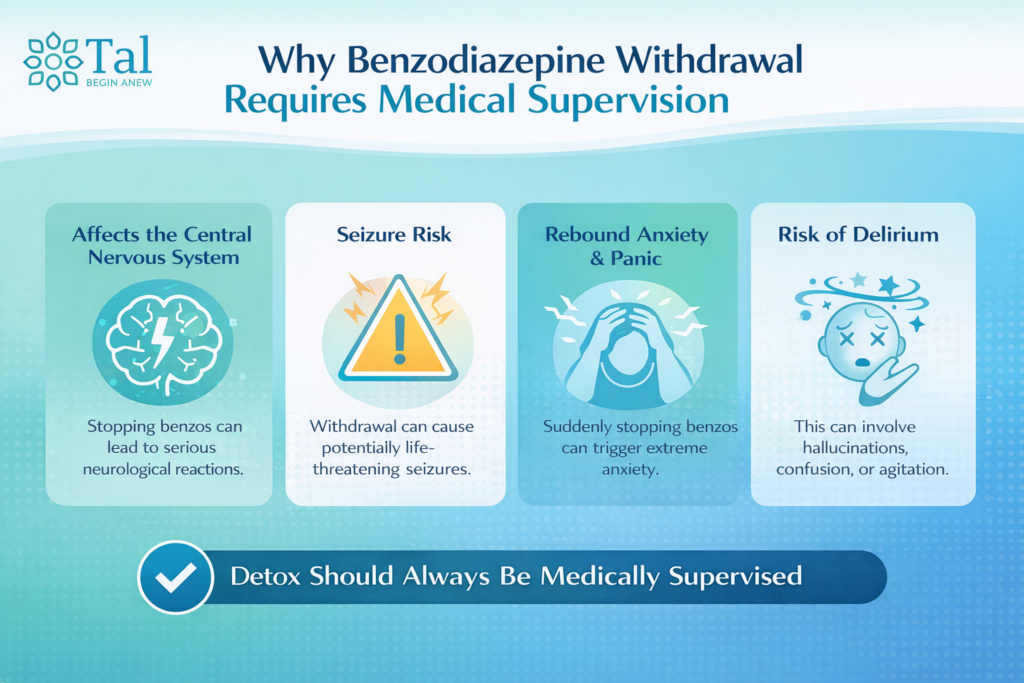
Benzodiazepines (like Xanax, Ativan, Klonopin, and Valium) affect the central nervous system. Over time, your brain adapts to their presence. When the medication is suddenly reduced or stopped, the nervous system can become overstimulated.
This can lead to:
-
Severe anxiety and panic attacks
-
Insomnia
-
Rapid heart rate
-
Tremors
-
Hallucinations
-
Seizures
-
Delirium
Unlike some other substances, benzodiazepine withdrawal carries a real seizure risk, even in people who were taking the medication as prescribed.
Because of this, medical professionals typically recommend a supervised taper — gradually reducing the dose under clinical monitoring.
Detox is not about weakness. It’s about safety.
Can You Detox from Benzos Naturally?
The short answer: No — not safely on your own.
There are no natural remedies that can prevent withdrawal seizures or fully manage the neurological effects of benzodiazepine withdrawal.
Herbs, supplements, hydration, or relaxation techniques may support comfort, but they do not replace:
-
Medical monitoring
-
A structured taper plan
-
Seizure precautions
-
Clinical support
Attempting to detox alone can increase the risk of serious complications.
If you’re considering stopping benzodiazepines, the safest first step is speaking with a medical provider who understands taper protocols.
What Natural Supports Can Help During a Medically Supervised Taper
While natural remedies cannot replace detox, some supportive strategies may help during a clinically supervised taper.
These should always be discussed with a medical professional before use.
Supportive approaches may include:
Hydration and Nutrition
Stabilizing blood sugar and staying hydrated can reduce stress on the body.
Sleep Hygiene
Consistent sleep routines can help regulate nervous system recovery.
Gentle Movement
Light walking, stretching, or yoga may help reduce muscle tension.
Mindfulness and Breathing Exercises
These can help manage anxiety spikes during tapering.
Therapeutic Support
Cognitive Behavioral Therapy (CBT), trauma therapy, and anxiety-focused counseling can address the underlying issues that led to benzo use in the first place.
Again, these are supportive tools — not substitutes for detox.
Symptoms That Require Immediate Medical Attention
If someone is withdrawing from benzodiazepines and experiences any of the following, seek emergency medical care immediately:
-
Seizures
-
Hallucinations
-
Severe confusion
-
Extreme agitation
-
Uncontrollable shaking
-
Irregular heartbeat
Benzo withdrawal is not something to “push through.”
Safety should always come first.
What Happens After Detox?
Detox stabilizes the body — but it does not address the deeper causes of benzodiazepine dependence.
Many people originally began taking benzodiazepines for:
-
Anxiety
-
Panic disorders
-
Trauma
-
Insomnia
-
Co-occurring mental health conditions
Without continued treatment, symptoms often return, increasing the risk of relapse.
This is why structured care after detox is so important.
Programs like:
-
Partial Hospitalization (PHP)
-
Intensive Outpatient (IOP)
-
Structured sober living
help individuals build coping skills, address anxiety safely, and develop long-term recovery strategies.
How TAL Behavioral Health Supports Long-Term Recovery
While TAL Behavioral Health does not provide medical detox services, we specialize in what comes next.
After completing a medically supervised detox, our programs help individuals:
-
Manage anxiety without reliance on benzodiazepines
-
Process trauma safely
-
Build healthy coping mechanisms
-
Develop relapse prevention skills
-
Rebuild structure and stability
We offer:
-
Aftercare support
-
Sober living options
Recovery doesn’t end after detox — in many ways, it begins there.
If you or a loved one is preparing for detox or has recently completed it, reach out to our team and take the next step toward lasting stability.